
 Welcome back to “EMM at Work,” our series of short videos featuring members of the EMM headquarters staff.
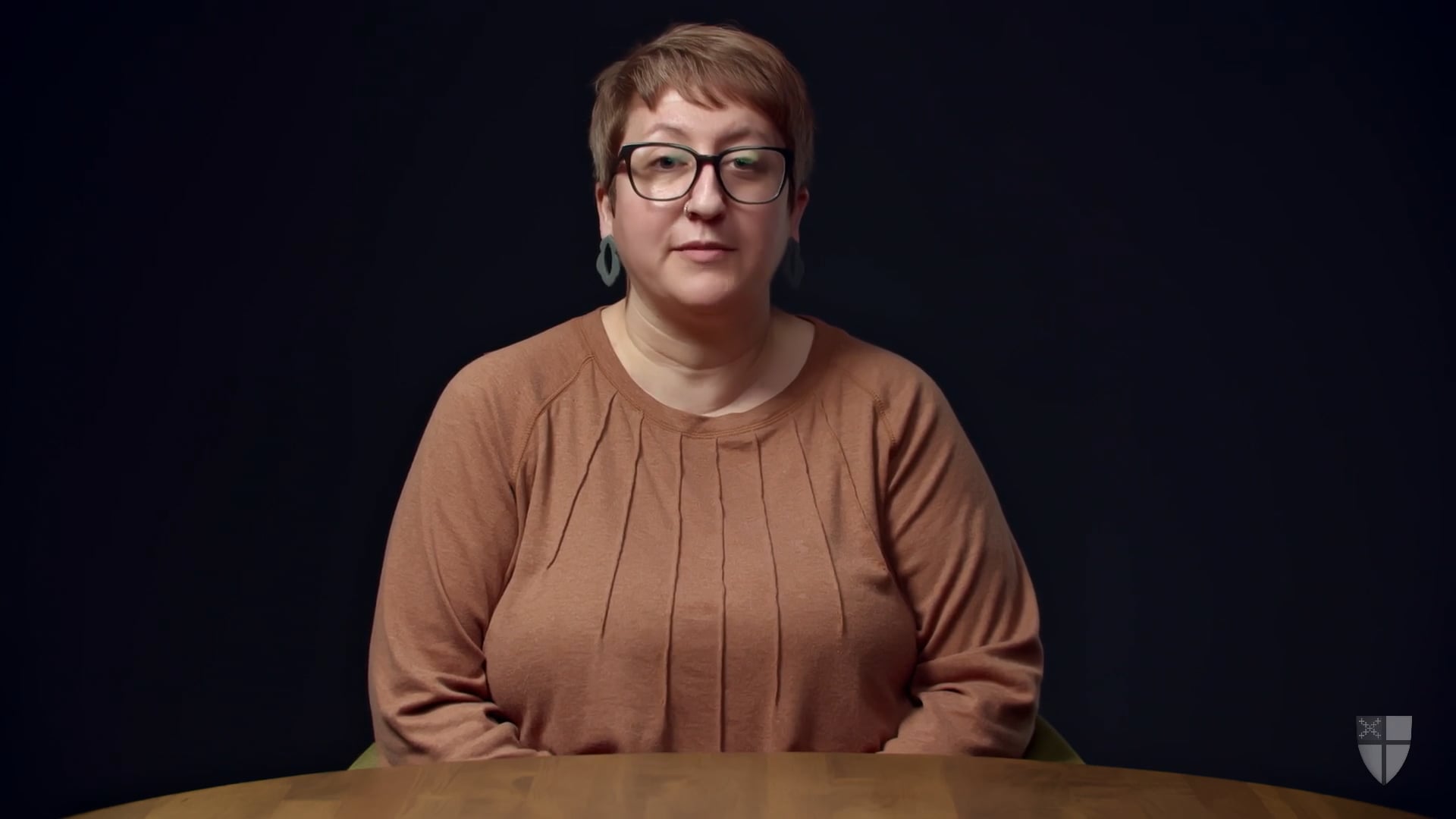
Next up, we are pleased to introduce two colleagues who work together to oversee the Preferred Communities (PC) programs. First, we hear from Candace Linn, Senior Program Officer for PC programs. Candace has worked in the refugee resettlement sector for 18.5 years and with the EMM HQ staff since May 2022. In the next installment, we will meet her colleague on the PC team, Casey VanHattum.
To understand the role of Preferred Communities programs in the well-being of refugees and newcomers, it is crucial to know the pathways envisioned by the U.S. government for these individuals once they arrive and are welcomed into a specific community. For each phase of newcomers’ integration, there is a separate federal program designed to support them in achieving immediate goals while also preparing them for self-sufficiency.
The “Reception and Placement” program (R&P) provides 90 days of support to people who enter the U.S. through the U.S. Refugee Admissions Program or with Special Immigrant Visas (SIVs). The R&P program is implemented by hundreds of organizations across the U.S., including full-service agencies and community partners affiliated with one of the 10 national resettlement agencies (including EMM).
Three months – or 90 days – may be enough time to set up a new home, obtain work authorization and other vital documents, enroll children in school, and begin to get your bearings in an unfamiliar language and culture. However, for many forcibly displaced people who have endured years of insecurity and turmoil and face other barriers to integration, 90 days is not enough time to achieve self-sufficiency.
Newcomers may need additional time and assistance to find employment and work towards financial independence. As we have seen, the Matching Grant program provides employment-focused support for up to 8 months. It’s the bridge that many newcomers need, as they find their footing in the U.S. job market and continue to adapt to a new way of life.
Yet for some newcomers, the challenges they face are not merely economic. Due to the horrors and trauma they experienced in fleeing for safety, some people admitted to the U.S. on humanitarian grounds arrive in extremely vulnerable conditions. They or their dependents may need specialized medical and mental health care as well as support in being able to access and navigate complex systems of medical and human services. Due to age, disabilities, care-giving responsibilities, or other factors, it may be hard for some adult newcomers to join the U.S. labor market within one year. They too can achieve stability and some form of self-sufficiency, but it may take a little longer.
This is where the Preferred Communities (PC) programs come in. PC programs are designed to serve a wide range of newcomers who need more time and support than the Reception and Placement or even the Matching Grant programs offer.
In this video, Candace describes the structure of the PC programs: the populations they serve, the two main sets of programs (Intensive Case Management and GAPS) offered under the PC umbrella, and how they are funded. She also explains why some newcomers need more time and support to achieve goals related to self-sufficiency, and how she and the rest of the PC team at EMM headquarters train and work with affiliate and partner organization staff who provide these services to clients. Candace shares some success stories from those involved in the PC programs, and what she finds most compelling in the work of welcoming newcomers.
We encourage you to spend a few minutes with Candace, learning about the Preferred Communities programs. And watch for a follow-up conversation with Casey VanHattum, coming soon. Between Candace and Casey, you will be an expert on all things PC and hopefully will be inspired to join EMM in building communities where everyone is welcomed and can thrive.